Bali, the enchanting island in Indonesia, is a slice of paradise that draws millions of travelers every year with its stunning beaches, vibrant culture, and captivating natural beauty. Whether you’re planning your first visit or are a seasoned Bali explorer, knowing the best time to visit this tropical haven is crucial for making the most of your trip.
Understanding Bali’s Seasons: When is the Best Time to Visit?
Bali experiences a tropical climate, which typically means there are two major seasons: the dry season and the rainy season. Understanding these seasons can help you plan your visit to make the most of the island’s offerings.
The Dry Season (April to October)
The dry season is often considered the best time to visit Bali. During these months, you can expect sunny days, lower humidity, and fewer rain showers. This period is perfect for beach activities, hiking, and water sports. Popular districts like Kuta, Seminyak, and Uluwatu are buzzing with life.
Key highlights of the dry season include:
- Perfect beach weather for sunbathing and swimming.
- Ideal conditions for surfing, diving, and snorkeling.
- Lively nightlife and cultural events.
The Rainy Season (November to March)
The rainy season in Bali sees higher humidity and frequent rain showers. However, this doesn’t mean you should avoid visiting during these months. The rains are often short-lived and usually occur in the late afternoon or evening, leaving plenty of time for exploration during the day.
Consider the benefits of visiting Bali during the rainy season:
- Fewer tourists, meaning less crowded attractions and beaches.
- Lower accommodation and flight prices.
- Lush, green landscapes perfect for photography and nature walks.
Bali’s Peak and Off-Peak Seasons
Travel preference can also depend on whether you enjoy bustling crowds or prefer a quieter, more laid-back experience. Here’s what to expect during Bali’s peak and off-peak seasons:
Peak Season (July and August)
Bali sees a surge in tourists in July and August, thanks to summer vacations in many parts of the world. This period aligns with the dry season and offers fantastic weather, but you should be prepared for more crowded beaches, attractions, and higher prices for accommodations and flights.
Off-Peak Season (January to March)
The local off-peak season sees fewer visitors, making it a great time to explore Bali’s serene side. You’ll find that it’s easier to book accommodations, get reservations at top restaurants, and savor the tranquility of less crowded beaches and temples.
Festivities and Cultural Events in Bali
Bali’s cultural richness is evident in its numerous festivals and events throughout the year. Attending these can offer deeper insights into Balinese traditions and add a unique charm to your vacation.
Nyepi (Day of Silence)
Nyepi, the Balinese New Year, is a unique and solemn event marked by a day of silence, fasting, and meditation. Occurring in March, all activities on the island come to a halt, and visitors can experience the profound spirituality of Bali.
Galungan and Kuningan
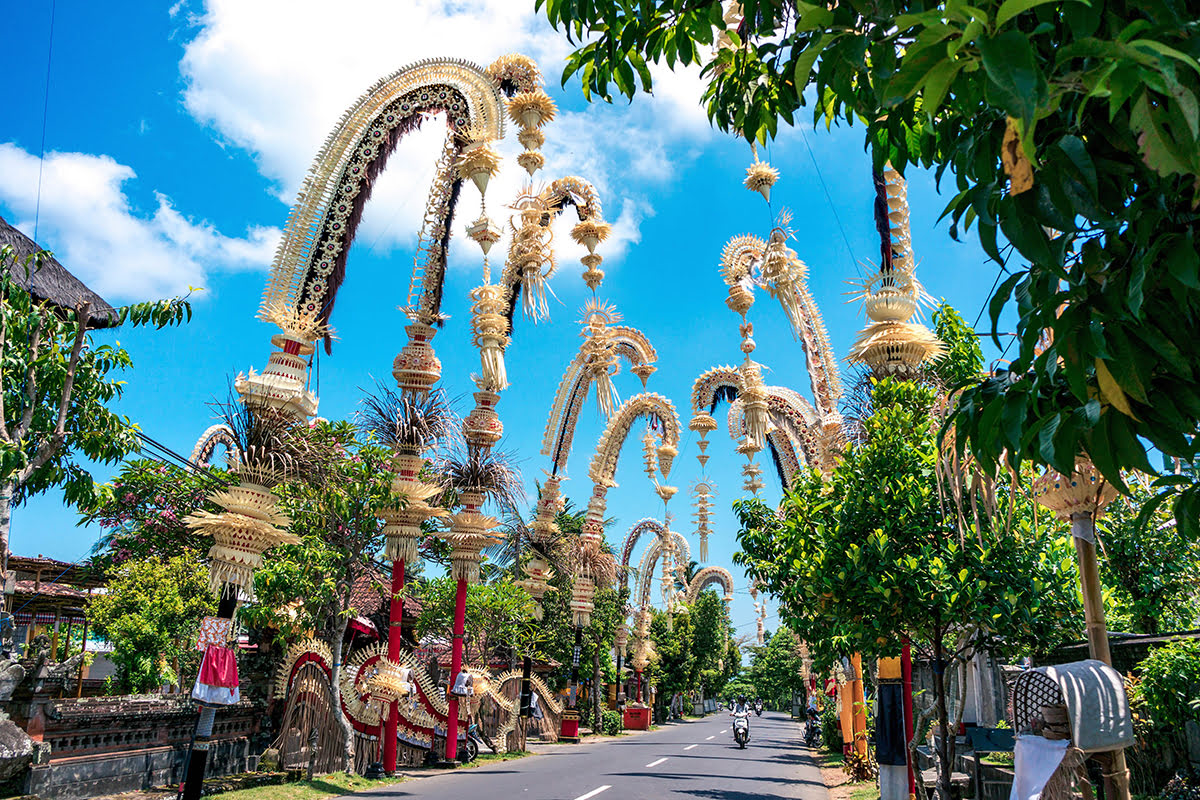
Galungan celebrates the victory of good over evil and is one of the most important festivals in Bali, held every 210 days. It is followed by Kuningan, which marks the end of the holiday. Streets are adorned with beautiful penjor (decorated bamboo poles), and families offer prayers and feasts to honor ancestral spirits.
Bali Arts Festival
Held annually in June and July, the Bali Arts Festival showcases the island’s rich cultural heritage through traditional dance, music, and art performances. It’s an unmissable event for those keen on experiencing Balinese culture firsthand.
Practical Travel Tips for Bali
Traveling to Bali can be a seamless experience if you keep a few practical tips in mind. From transportation to etiquette, these tips ensure you have a trouble-free and enjoyable journey.
Getting Around Bali
Bali offers various transportation options to suit different travel styles and budgets:
- Hiring a Private Driver: Convenient for day trips and exploring multiple destinations.
- Motorbike Rentals: Ideal for solo travelers and couples, offering flexibility and ease of movement.
- Local Taxis: Available in most tourist areas for short journeys.
Cultural Etiquette
Respecting local customs and traditions is crucial when visiting Bali. Here are a few etiquette tips:
- Dress Modestly: Especially when visiting temples and religious sites.
- Tipping: While not mandatory, a small tip is appreciated in restaurants and by guides.
- Show Respect: Follow temple rules and avoid stepping on offerings placed on the ground.
Accommodation Options in Bali
Bali offers a wide range of accommodations to suit all budgets and preferences, from luxurious resorts to cozy guesthouses and affordable hostels. Here are a few recommendations:
Luxurious Resorts
For those seeking luxury and comfort, Bali has some of the world’s finest resorts offering top-notch amenities and services.
Cozy Guesthouses
Guesthouses provide a more intimate and homely experience. They are perfect for travelers looking for personalized service in a cozy setting.
Budget Hostels
Backpackers and budget travelers will find numerous hostels that offer affordable rates and vibrant social atmospheres.
Bali is a destination that offers limitless possibilities. Whether you’re drawn to its sun-kissed beaches, rich cultural experiences, or adventurous activities, understanding the best time to visit and planning accordingly can make your trip unforgettable. With this guide, you’ll be well-equipped to explore and enjoy everything Bali has to offer, no matter when you choose to visit.